
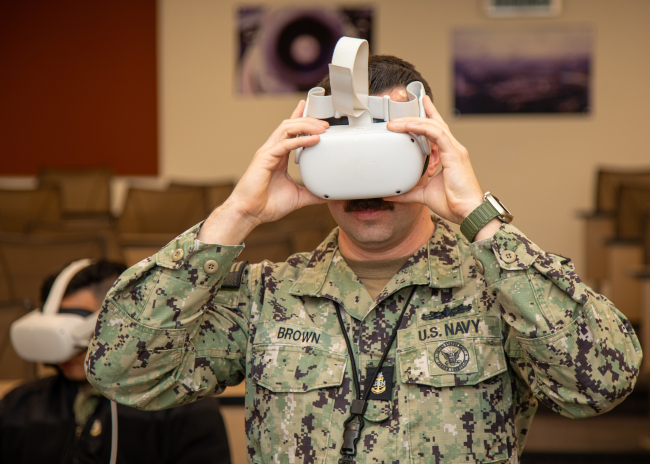
Imagine a world with unlimited virtual training sessions for mental health professionals, with a diverse selection of scenarios to test from low to high stress environments. XR brings the possibility of having realistic simulated environments that can carry the stress and nature of real situations without the consequence, enabling safe and efficient training for all within the field. XR training can be more cost-efficient compared to traditional methods, especially for organizations delivering training at scale. However, we shouldn't overlook the upfront investment in software development. Rather than focusing solely on cost savings, it may be better to emphasize XR training as flexible, accessible, and cost-efficient. They can reduce long-term financial and labor costs and improve convenience and learning accessibility. With recent innovations in AI (specifically LLMs), these simulations can be infinitely repeated and randomized, creating unique experiences each time in addition to more standardized and constant scenarios, for times where stricter consistency is needed.
VR Products for Mental Well-Being
For those interested in exploring mental health resources in XR, a number of consumer-facing applications offer an accessible entry point.
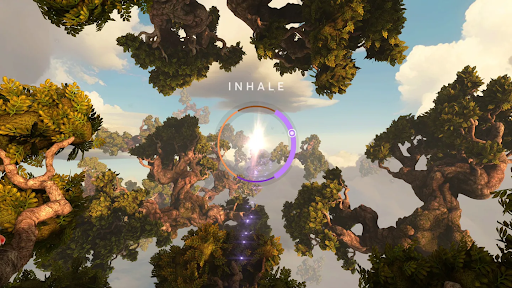
- TRIPP: Meditation, Relaxation, Sleep offers a low barrier of experience for anyone desiring more peace in their lives. It is an award winning application focused on relaxations from daily stressors. Tripp provides a space for mediation, creating immersive relaxed environments.
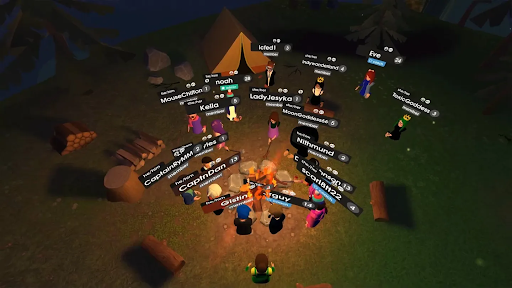
- Innerworld is a virtual world with certified guides for support, to help you be your best self. It gives you access to an environment of specific certified guides as well as other individuals that want to support mental health advocacy.
- For training and simulation experiences, Ovation and Ai Listener: Your Emotional Guide provide exposure to the role of both a patient and therapist in a simulated environment. While these tools aren’t direct replacements for supervised training, they are apps and experiences that anyone anywhere can experience and test for themselves.
Research and Practice in VR for Mental Health
Not all resources require a headset. By leveraging familiar hardware, certain platforms become immediately accessible to a wider audience.
General Counselor Training
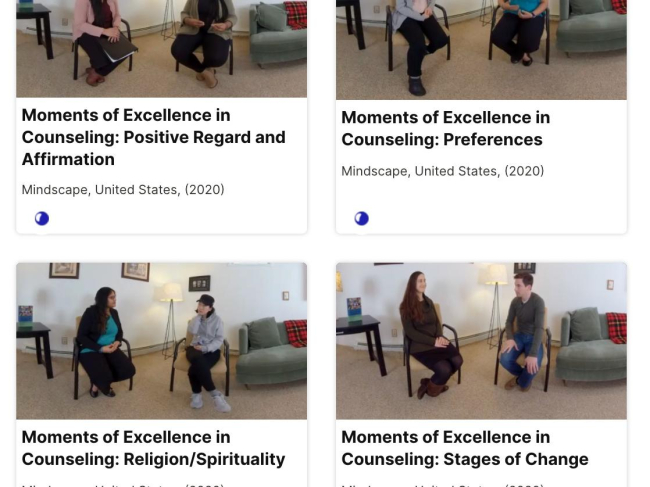
With Mindscape Commons, Penn State faculty and students led by Dr. Carlos Zalaquett, a professor of psychology at the university, created a series of immersive virtual experiences entitled “Moments of Excellence in Counseling.”
- The purpose of these 12-15 minute videos are to train future counselors by giving them real world examples in a safe environment.
- The videos are filmed in 180 degrees with the intent of making the experiences more immersive.
- Since the experiences are built within the Mindscape Commons platform, the experiences are not limited to just VR headsets, and instead available to view on mobile, web, or a VR device.
- Some specific experiences are locked behind specific Mindscape Commons institutional membership, but there are many free experiences hosted on the site.
The researchers specifically focused on fixing/refining skills that students struggled with, because some topics were more abstract and difficult to understand reading text alone. Doğukan Ulupinar, an assistant professor at LIU believes that XR technology like this will be more of the norm within 20-35 years, underscoring its importance within mental health education. This type of learning is more immersive and connected in comparison to more traditional methods, allowing for a better understanding of the work that is actually being completed.
The URochester also has access to Mindscape Commons. You can view the 2D collection or stop by Studio X to try the collection on our VR headsets.
Outside of just experiences, academic research has also been conducted on the effectiveness of XR use in counselor training. Using the Mursion virtual reality platform, counselor educators Amber L. Pope and Chelsea Hilliard, from William & Mary and Old Dominion University respectively, created a series of simulated counseling sessions to help masters level trainees strengthen core clinical skills.
- The VR environment features live avatar clients with diverse backgrounds so students can practice challenging tasks like suicide assessment, diagnostic interviewing, crisis response, sexuality counseling, and telehealth intakes in a safe but realistic setting.
- Sessions are first created in VR and then broadcasted through Zoom, allowing instructors and classmates to replay interactions, pause at key moments, and offer focused feedback on specific counseling skills.
Because the same scenarios can be adjusted in difficulty and reused across different classes and semesters, the VR simulations provide repeated, structured practice that builds students' confidence and prepares them for real clients in both in person and online counseling settings. You can read their research paper here: Promoting Counselor Trainees’ Clinical Skill Development Using Virtual Reality Simulations.
Specialized Sensitive Trainings
At the Univerisity of Texas at Arlington, simulations were created where the user would speak with a virtual veteran about suicide risk and safe storage of firearms and medications. This highly specialized training case demonstrates what is possible when you have a clear direction for your research.
- For counseling students or early career clinicians, the simulation offers a safe way to practice lethal means safety counseling and get used to the language and flow of what can be extremely difficult and sensitive conversations.
A study like this is especially important because it shows that hyper specific environments for training can be utilized in VR counseling, however this specific training is only for this one use case. The full study details are hosted online: Virtual Reality Lethal Means Safety Training. A major advantage of research within the XR training is the hyper specific circumstances the training covers. For example, there are programs specifically focused on training for dietetic counselors.
Dietetic Counselor Training
Researchers at Tel Hai Academic College looked into how effective simulations were at training students with dietetic internships. This pilot program uses actor based clinical simulations to help dietetic interns strengthen their counseling skills before they meet real patients. Students take part in group workshops and one to one sessions where trained actors play patients with issues like obesity treatment, high blood lipids, or weight gain after bariatric surgery, and each case unfolds across several consecutive appointments so interns can practice continuity of care, follow up conversations, and handle resistance over time.
- Every simulation round includes a briefing, a recorded counseling session, and a structured debrief where interns receive feedback from the actor, peers, a registered dietitian, and a simulation facilitator, giving them a rare 360 degree view of how they communicate.
- What makes this model unique is the focus on ongoing relationships with the same simulated patient and the decision to replace part of the traditional clinic hours with carefully designed scenarios that are emotionally intense but still safe for students to practice mistakes and repairs.
- Advantages include high realism, immediate targeted feedback, and clear gains in professional confidence and communication reported by interns, actors, and tutors, while limitations include the cost and logistics of hiring and training actors and facilitators, the reliance on one college and self report measures, and the fact that even very good actors can only approximate the unpredictability of real patients.
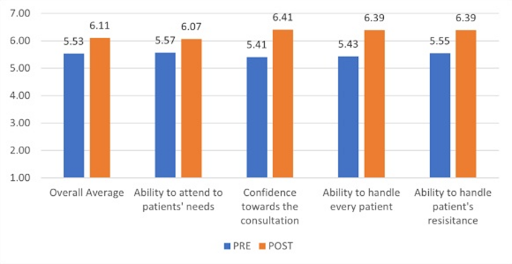
The iENDEAVORS team in association with New Mexico State University created VR simulations focused on counselor training for dietetic students. The research was well received by the students and in the end they found meaningful contributions in counseling self-efficacy and comfort.
Open Source Software
Some of the software that exists in this area for training resources is open source. One of the best examples of this is Milo. Milo is an open source virtual human platform that can be dropped into VR or AR scenes to act as a talking client, peer, or supervisor, giving counseling students a flexible way to practice conversation skills in XR.
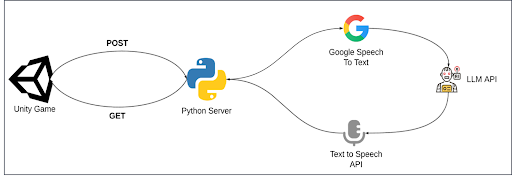
- Built to connect with Unity apps (the leading game engine for VR projects), Milo listens to the user’s speech, runs it through speech to text and a large language model, and then speaks back through text to speech, so students can rehearse therapeutic dialogue in an immersive environment that feels like a real interaction.
- What makes Milo unique is that it supports different modes, including a chat mode for one on one practice and an assist mode where the virtual human listens in on a group session or meeting and joins only when invited, plus the option for a human operator to step in and override or guide responses during live events.
- Since the code and configuration tools are open source, educators can tune prompts, swap LLMs, and design their own counseling scenarios without building a whole system from scratch.
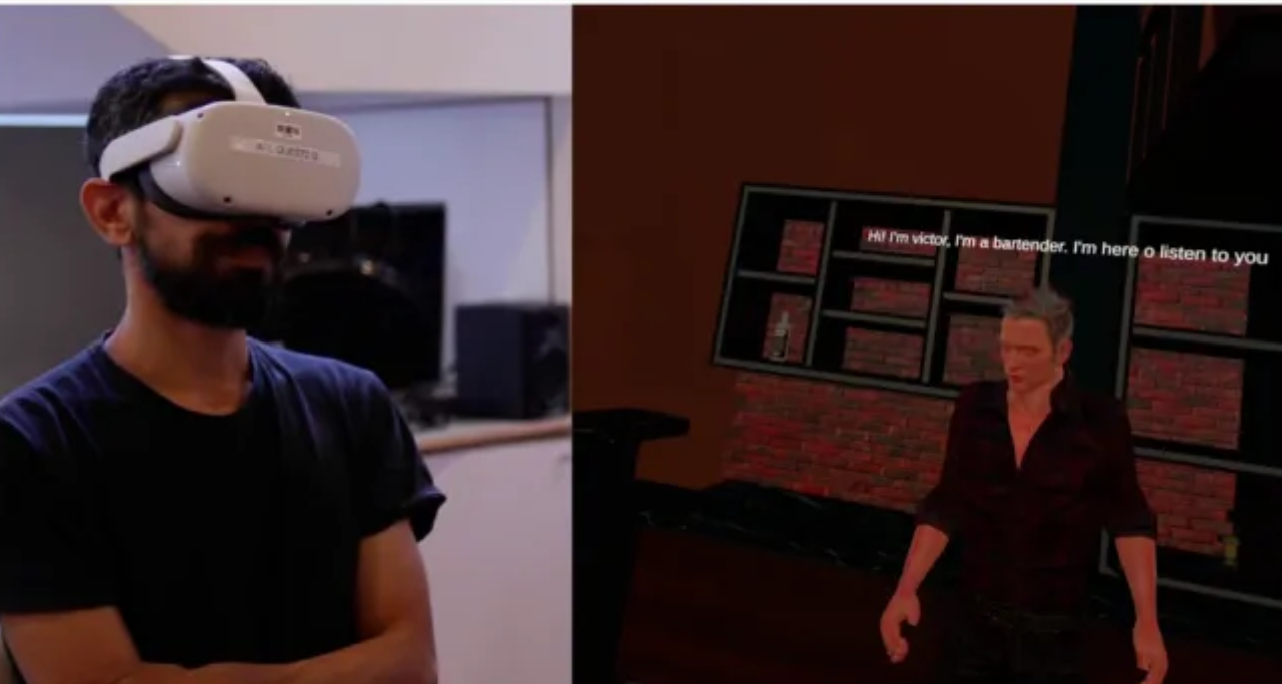
A major advantage is this flexibility and realism, but there are tradeoffs, including the usual limits of LLMs such as occasional off target or biased responses, the need for careful supervision when used in sensitive mental health contexts, and the fact that the system is still a research platform rather than a fully validated clinical training product. With how simple and beginner friendly it is to make interactive XR projects within Unity, creating experiences for therapist training is something many university students can do. The VR Therapist Virtual Mental Health Experience project introduces an immersive training tool designed to help future mental health practitioners practice therapeutic communication in a realistic setting.
- Built in Unity and powered by a LLM, the system places users inside a virtual clinic where they can speak with an AI driven therapist who responds to their voice in real time.
- It is similar to some of the other LLM experiences within the notion.
- The environment uses presence and realism cues like head tracking, lip syncing, and natural conversational flow to make the interaction feel authentic.
- Students or trainees can rehearse skills such as guiding a conversation, expressing empathy, or recognizing signs of distress, all while receiving consistent feedback from the AI therapist.
- Since the platform relies on virtual reality rather than live actors, the experience is accessible, repeatable, and cost effective, giving learners a safe space to practice challenging mental health conversations as many times as needed.
The use of XR in mental health contexts underscores the value of alternative approaches that complement traditional methods. By embracing emerging immersive technologies for counselor education and training, these experiences have the potential to become more affordable, scalable, and accessible. Applications such as VirtualSpeech and Ovation offer meaningful opportunities to practice communication and counseling skills within familiar environments, creating an accessible and low-risk space for navigating difficult conversations. At Mary Ann Mavrinac Studio X, we provide the specialized hardware, expertise, and consultation needed to help transform immersive ideas from theory into practice. Whether you are interested in launching a formal research study or simply exploring the possibilities of XR, we welcome conversations with anyone interested in shaping the future of mental health education and training.
Works Cited
Linder, I., Z. Lukach, K. Pergament, et al. “The Effect of Simulation Training on the Counseling Skills of Nutritional Science Students in Dietetic Internships.” BMC Medical Education, vol. 25, 2025, p. 1114. https://doi.org/10.1186/s12909-025-07674-x.
Pope, Amber L., and Chelsea Hilliard. “Promoting Counselor Trainees’ Clinical Skill Development Using Virtual Reality Simulations.” Teaching and Supervision in Counseling, vol. 6, no. 1, 2024. https://doi.org/10.7290/tsc06n72r.
Quick, Virginia, et al. “IENDEAVORS: Development and Testing of Virtual Reality Simulations for Nutrition and Dietetics.” International Journal of Environmental Research and Public Health, vol. 22, no. 9, 5 Sept. 2025, p. 1389. https://doi.org/10.3390/ijerph22091389.
Shoa, Alon, and Doron Friedman. “Milo: An LLM-Based Virtual Human Open-Source Platform for Extended Reality.” Frontiers in Virtual Reality, 19 Feb. 2026, www.frontiersin.org/journals/virtual-reality/articles/10.3389/frvir.2025.1555173/full.
Penn State University. Koons, Stephanie. “Researchers Develop Virtual Reality Videos to Train Counselors.” Accessed 19 Feb. 2026.
ClinicalTrials.gov. “Virtual Reality Lethal Means Safety Training.” ClinicalTrials.gov, U.S. National Library of Medicine, 21 Oct. 2025, clinicaltrials.gov/study/NCT07219355?tab=study.
GitHub Repository: VR-Therapist-Virtual-Mental-Health-Experience. “A Revolutionary Blend of Virtual Reality and Large Language Models for Immersive Mental Health Therapy Sessions.” Accessed 19 Feb. 2026.
TRIPP. Meta Store, version 1.0, 2024, www.meta.com/experiences/tripp-meditation-relaxation-sleep/2173576192720129/.
Innerworld. Meta Store, version 2.0, 2024, www.meta.com/experiences/innerworld-by-xrhealth/5406767536033508/.
Ovation. Meta Store, version 1.5, 2024, www.meta.com/experiences/ovation/4510688418969375/.
AI Listener. Meta Store, version 1.0, 2024, www.meta.com/experiences/ai-listener-your-emotional-guide/7182773695092320/.
